
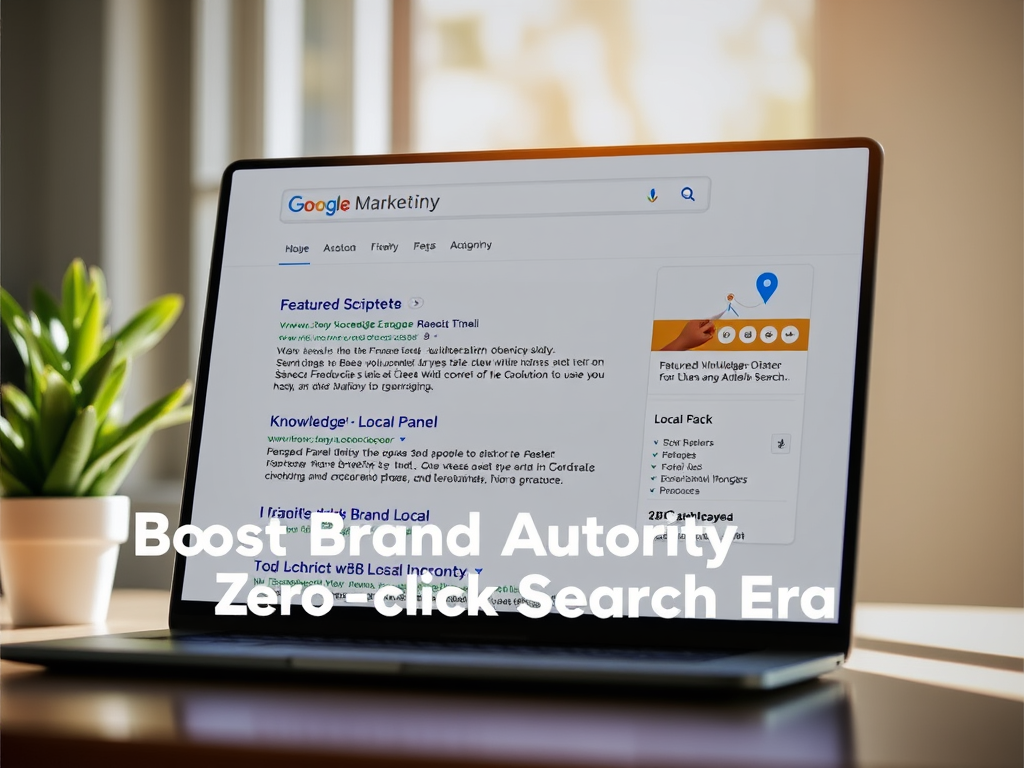
Winning in today’s search landscape is no longer just about driving traffic to your website. With the rise of zero-click search, the game has fundamentally changed. Zero-click search occurs when a user’s query is fully answered directly on the search engine results page (SERP), eliminating the need for them to click on any external links. For marketers, this means that even if you’re ranked #1, you might not get a single visitor. However, this is not a crisis; it’s an opportunity for brand visibility and authority.
Zero-click searches are powered by SERP features that provide immediate, concise answers to user queries. These features include a Featured Snippet, a highlighted block of text, list, or table at the top of the SERP that directly answers a user’s question, and Knowledge Panels, which are information boxes on the side of the desktop SERP that summarize a person, company, or entity using information from various web sources. For “near me” searches, a Local Pack presents a map and a list of local businesses, and AI-driven searches now frequently generate AI Overviews that synthesize information from multiple sources into a conversational summary. This shift is driven by AI advancements, the prevalence of mobile and voice search, and a growing user expectation for instant, direct answers.
To thrive in a world where visibility is the new currency, marketers must pivot their SEO strategy from a traffic-centric model to a visibility-first one. This means optimizing for what’s being called “Answer Engine Optimization.” Instead of just optimizing for keywords, you must now optimize your content to provide clear, direct answers that an AI or search algorithm can easily extract. This strategy involves structuring your content around common user questions, using headings that are direct questions (e.g., “What is a featured snippet?”), and immediately following these with a concise, direct answer in a short paragraph. Furthermore, implementing structured data, such as FAQ or HowTo schema, provides search engines with a clear, machine-readable understanding of your content, which increases your chances of appearing in rich results.
To establish a robust brand presence, your brand’s authority and trustworthiness are more important than ever. Google’s emphasis on E-E-A-T (Experience, Expertise, Authoritativeness, and Trust) is critical for being chosen as a source for featured snippets and AI overviews. A brand must build its own knowledge graph by ensuring all its online information is consistent and comprehensive. This includes updating your Google Business Profile and gaining high-quality backlinks from reputable sources to establish credibility. By focusing on producing in-depth, well-researched content that demonstrates authentic experience and expertise, you signal to both search engines and users that your brand is a trustworthy authority in its field.
Finally, marketers must learn to rethink content and measurement in this new environment. The success of your content can no longer be judged by clicks alone. Focus on creating multimodal content, such as high-quality, relevant images and videos with descriptive metadata and alt text, to appear in image and video carousels. It’s also vital to acknowledge that organic search may not be your only source of traffic, so diversifying traffic sources by investing in social media and email marketing can create a more resilient strategy. The key is to shift your focus to metrics that measure visibility and brand authority. You should now monitor impressions in Google Search Console, brand search volume (how many people are searching for your brand name), and voice search exposure, rather than just click-through rates.
The rise of zero-click search is not the end of SEO; it’s the evolution of it. It’s a clear signal that the value of your brand’s content is no longer solely measured by the clicks it generates, but by its ability to answer user queries with authority and credibility. By adapting your strategy to a visibility-first, authority-driven model, you can ensure your brand remains a trusted and influential presence in the new, post-click search landscape.
 Niki Martinov