
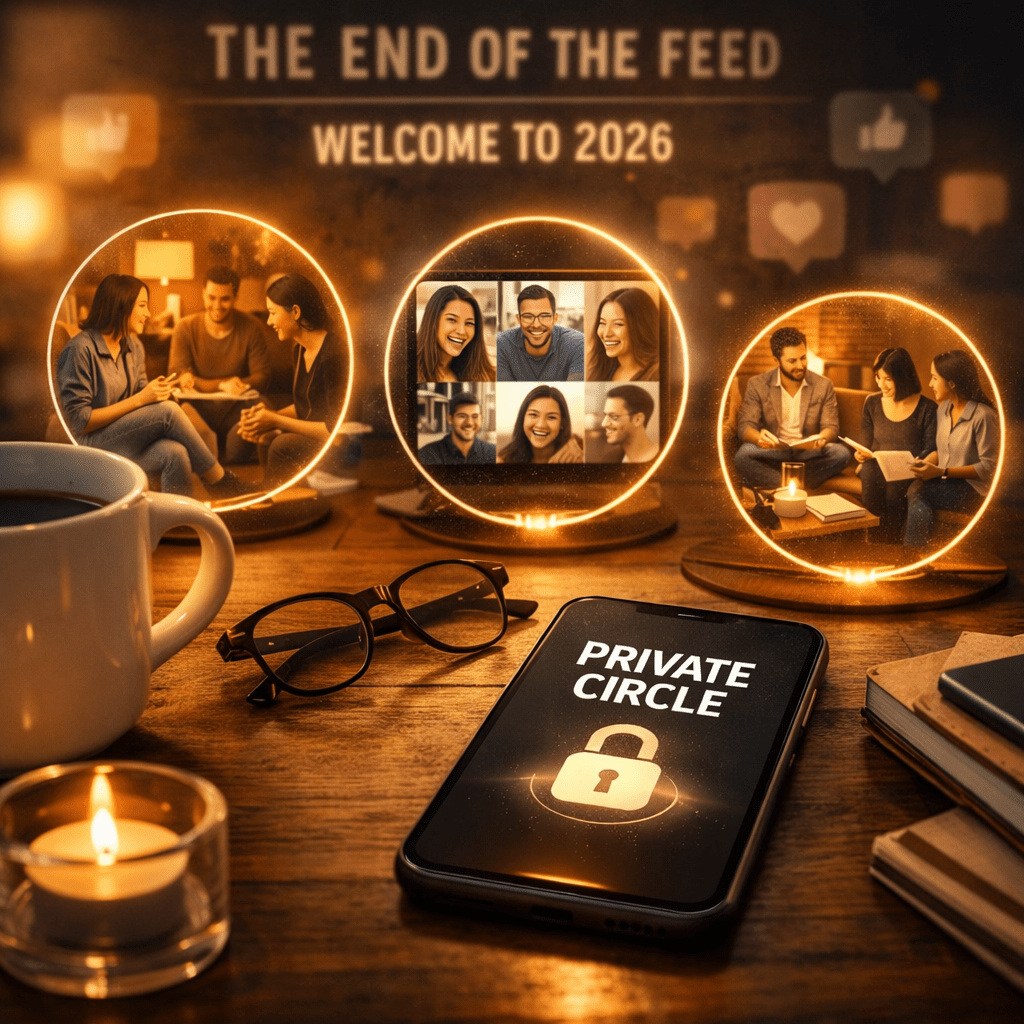
As we step into 2026, it feels like a natural moment to pause, reflect, and reset. A new year brings fresh energy, clearer priorities, and new ways of connecting with the world around us. May this year be one of focus, meaningful growth, and deeper relationships-both personally and professionally. As the digital landscape continues to evolve, 2026 also promises a more intentional and human approach to how we connect online.
That shift is already underway, and nowhere is it more visible than in social media itself.
The End of the Infinite Feed
For more than a decade, the social feed has been the dominant interface of the internet. Endless scrolling, algorithmic timelines, and mass broadcasting defined how content was created, consumed, and valued. Success was measured in reach, impressions, and follower counts. But by the start of 2026, the cracks in this model are impossible to ignore.
Audiences are exhausted. Creators are burned out. Brands are questioning the return on attention in feeds crowded with ads, recycled trends, and algorithm-driven noise. The promise of “post once, reach millions” has faded, replaced by shrinking organic reach and rising costs. The feed no longer feels social-it feels transactional.
What’s emerging in its place is quieter, more intentional, and far more personal.
From Mass Broadcasting to Meaningful Connection
The core shift of 2026 is not technological; it’s psychological. People are no longer looking to broadcast their lives to the widest possible audience. They are looking to belong.
Private circles–losed communities, invite-only groups, and niche digital spaces-are becoming the new center of gravity. These environments prioritize relevance over reach and trust over visibility. Whether it’s private Discord servers, curated WhatsApp groups, Slack communities, paid memberships, or gated platforms like Circle or Geneva, the appeal is the same: fewer people, stronger bonds.
In these spaces, conversation replaces performance. Engagement feels genuine because participants share a common interest, value system, or goal. The pressure to go viral disappears, and with it, much of the anxiety that defined the public feed era.
The Rise of Decentralized Social Networks
At the same time, decentralized and semi-decentralized networks are gaining traction. Platforms built around user control, data ownership, and community governance are challenging the dominance of centralized social giants. These networks often lack traditional feeds altogether or allow users to customize how content is surfaced.
This decentralization reflects a broader cultural shift toward digital autonomy. Users want control over what they see, who they interact with, and how their data is used. In response, new platforms are prioritizing privacy, interoperability, and transpare-y-values that resonate strongly in a post-algorithm world.
Rather than competing for attention inside a single global feed, these networks encourage many smaller, interconnected spaces. Social media becomes modular, not monolithic.
Why the Feed Is Losing Power
The decline of the feed isn’t accidental. It’s the result of years of over-optimization. Algorithms became so efficient at maximizing engagement that they stripped away meaning. Content optimized for clicks, outrage, or virality often lacked depth, context, or emotional authenticity.
As AI-generated content floods public platforms, this problem intensifies. When everything is optimized, nothing feels special. Private circles offer an antidote: environments where context matters, contributions are recognized, and trust is built over time. In these spaces, attention is not extracted-it’s earned.
What This Means for Creators and Brands
For creators, 2026 is a year of recalibration. Growth no longer comes from chasing algorithms, but from cultivating communities. The most resilient creators are building ecosystems around their work-newsletters, private groups, paid memberships, and direct relationships with their audiences.
Brands are undergoing a similar shift. Instead of pushing messages to mass audiences, they are learning to host, facilitate, and participate in communities. The role of the brand becomes less about broadcasting and more about creating value within a shared space.
This doesn’t mean public platforms disappear. They become entry points rather than destinations-places to spark discovery and invite people into deeper, more meaningful environments.
The New Social Contract
Private circles thrive on a different set of rules. Transparency matters. Contribution matters. Listening matters. These spaces reward brands and individuals who show up consistently, speak honestly, and respect the community’s purpose.
In many ways, this marks a return to the original promise of the internet: connection over consumption. Smaller networks foster accountability and authenticity because reputation carries more weight when the room is smaller.
Looking Ahead
As we move forward into this new year, the opportunity is clear. Whether you’re a creator, a brand, or simply a digital citizen, the future belongs to those who prioritize depth over reach and community over performance. 2026 isn’t about being everywhere. It’s about being somewhere that truly matters.
 Niki Martinov