
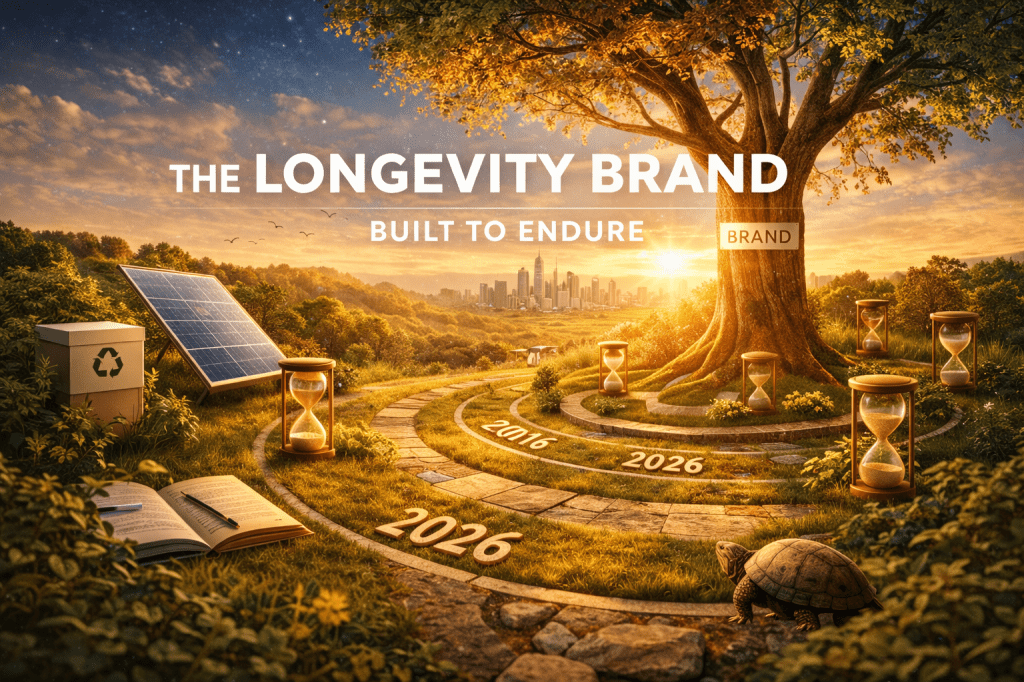
For years, sustainability in marketing was treated as a niche concern. It was often reduced to eco-friendly packaging, green messaging, or one-off CSR campaigns. While those efforts still matter, they no longer define what sustainability truly means for brands in 2026. Today, the conversation has shifted from being environmentally responsible to being time-responsible. The brands that endure are not just eco-conscious. They are designed for longevity.
A longevity brand is built to last culturally, emotionally, and strategically. It does not chase every trend or exhaust its audience with constant noise. Instead, it focuses on relevance over time, trust over speed, and value over visibility.
Why Short-Term Marketing Is Failing
The modern marketing ecosystem rewards immediacy. Viral content, rapid launches, and short campaign cycles promise fast results. But these tactics come with hidden costs. They fragment brand identity, dilute messaging, and create audience fatigue. What works today often feels outdated tomorrow.
As consumers become more aware of these patterns, they are responding with skepticism. People are increasingly resistant to brands that feel opportunistic, inconsistent, or constantly reinventing themselves to stay visible. Attention is harder to earn, and once trust is lost, it is difficult to regain.
Longevity brands take a different path. They prioritize continuity over novelty and consistency over constant reinvention. Instead of asking how to win the next quarter, they ask how to stay meaningful over the next decade.
From Eco-Friendly to Time-Friendly
Sustainable marketing is evolving beyond environmental impact. While responsible sourcing and ethical practices remain essential, they are now part of a broader framework that includes time sustainability.
Time-friendly brands respect the audience’s attention. They do not overwhelm with endless content, notifications, or campaigns. Their communication is intentional, measured, and purposeful. Every message serves a role in a larger narrative rather than competing for immediate clicks.
This approach aligns with growing consumer desire for calm, clarity, and depth. In a world of constant digital stimulation, brands that slow down and simplify stand out as more trustworthy and mature.
Designing Brands Built to Endure
Longevity is not accidental. It is designed.Enduring brands invest in strong foundations. Clear positioning, a defined worldview, and a disciplined identity system allow them to evolve without losing coherence. They are flexible, but not fragile. Adaptable, but not reactive.
These brands understand that design trends come and go, but meaning lasts. Their visual identity may evolve subtly over time, yet their tone, values, and purpose remain recognizable. This consistency builds familiarity, and familiarity builds trust.
Longevity brands also resist over-optimization. They are not constantly reshaping themselves to please algorithms. Instead, they prioritize human understanding and emotional connection, knowing that relevance is earned slowly.
Sustainable Marketing as a Relationship Strategy
At its core, sustainable marketing is relational. It treats customers not as transactions, but as long-term partners in the brand’s story. This mindset changes how success is measured.
Instead of focusing solely on reach and conversion, longevity brands track retention, advocacy, and emotional loyalty. They invest in post-purchase experiences, thoughtful communication, and community-building rather than constant acquisition.
This long-view strategy pays off. Loyal audiences are more forgiving, more engaged, and more likely to grow with the brand over time. In an environment where acquisition costs continue to rise, sustainability becomes not just ethical, but economically essential.
The Cultural Advantage of Longevity
Brands that endure often become cultural reference points. They are not defined by one campaign or moment, but by a continuous presence in people’s lives. This cultural staying power cannot be manufactured quickly.
By avoiding burnout-driven marketing cycles, longevity brands maintain relevance across generations. They evolve alongside their audience instead of chasing it. This makes them resilient in times of change, uncertainty, or market disruption.
In contrast, brands built on short-term hype often struggle to survive once attention moves elsewhere.
The Future Belongs to Brands That Think Long
As we move further into an era defined by AI, automation, and accelerated content production, longevity will become a key differentiator. When everything can be created faster, what matters is what feels considered, intentional, and enduring.
Sustainable marketing is no longer about appearing responsible. It is about being responsible with time, attention, and trust. Brands that understand this shift will not just survive changing trends. They will outlast them.
In the end, the most sustainable strategy is not doing more. It is building something strong enough to last.
 Niki Martinov