
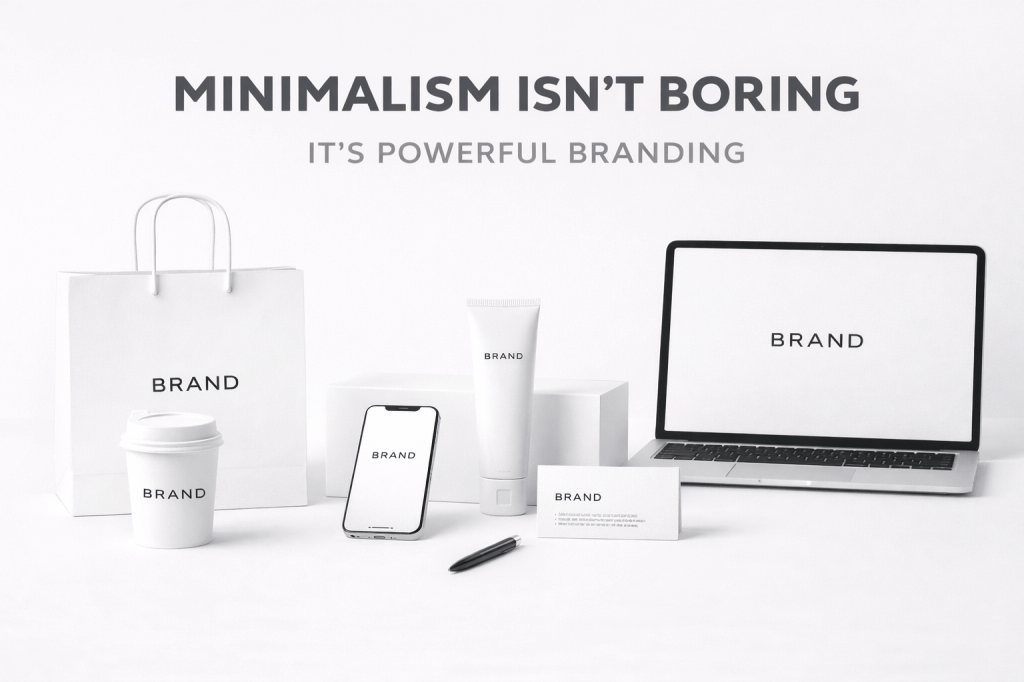
Human attention is limited. Every feed, website, and ad competes aggressively for it. When everything shouts, silence becomes noticeable. Minimalist branding works because it reduces cognitive load. It makes information easier to process and emotions easier to feel.
A clean design gives the brain space. Instead of forcing users to decode complex visuals, it guides them effortlessly. That sense of ease translates directly into trust. Brands that feel calm, controlled, and intentional are perceived as more credible and more premium.
Minimalism signals confidence. It suggests that the brand does not need decoration to prove its value.
Clean Design as a Strategic Choice
Minimalism is not about stripping things away randomly. It is about deciding what truly matters and removing everything that distracts from it. This applies to logos, typography, layouts, color palettes, and even messaging.
Consider brands like Apple. Its identity relies on white space, restrained typography, and consistent visual language. The design never competes with the product. It frames it. The same applies to companies like Stripe or Airbnb, where interfaces are intentionally simple so users can focus on experience rather than navigation.
Luxury fashion offers another clear example. Brands like The Row or Bottega Veneta have reduced visible logos and visual noise. Their minimalism communicates maturity and exclusivity. The design is quiet, but the message is strong.
Minimalism Creates Stronger Brand Memory
One of the biggest advantages of minimalist branding is memorability. When a design system is clear and consistent, it becomes recognizable faster. Simple forms, limited color palettes, and strong typography are easier to recall than complex compositions.
This is especially important in digital environments where content is consumed quickly. A clean visual identity allows a brand to be recognized even at a glance. Over time, that recognition builds familiarity, and familiarity builds loyalty.
Minimalism also scales better. A simple system adapts effortlessly across platforms, formats, and technologies. It remains effective whether displayed on a phone screen, a website, a product package, or a billboard.
Minimalism Is Emotional, Not Empty
There is a myth that minimalism lacks emotion. In reality, minimalism often amplifies emotion by removing distractions. When fewer elements compete for attention, the remaining ones carry more weight.
A single image can feel more powerful than a collage. A short, well-written line can resonate more than a paragraph of copy. Calm visuals combined with confident messaging create a sense of reassurance and control. In an overstimulated world, that emotional response is deeply appealing.
Minimalist brands are not cold. They are composed.
When Minimalism Goes Wrong
Minimalism only works when it is intentional. When brands remove elements without understanding their purpose, the result can feel generic or unfinished. True minimalism requires strong fundamentals. Clear positioning, a defined voice, and a thoughtful design system are essential.
Without strategy, minimalism becomes emptiness. With strategy, it becomes precision.
This is why successful minimalist brands invest heavily in detail. Typography choices, spacing, proportions, and tone are carefully considered. What looks simple on the surface is often the result of complex decision-making behind the scenes.
Why Minimalism Fits the Future of Branding
As AI accelerates content creation and visual output becomes more abundant, differentiation will not come from doing more. It will come from doing less, better. Minimalism offers a way to stay distinctive without escalating noise.
It also aligns with broader cultural shifts. Audiences are seeking calm, clarity, and meaning. Brands that reflect those values visually and emotionally feel more human and more trustworthy.
Minimalism is not a trend. It is a long-term branding philosophy.
A Design Aesthetic That Builds Confidence
Minimalist branding does more than look good. It communicates how a brand thinks. It shows respect for the audience’s time and attention. It reflects confidence, maturity, and focus.
If your brand currently feels cluttered, inconsistent, or visually overwhelming, minimalism might not be about removing creativity. It might be about revealing it.
Through my Brand Identity and Design work at nikimartinov.com, I help brands simplify without losing character. The goal is not to make everything look the same, but to create clean, intentional design systems that feel timeless, confident, and unmistakably aligned with the brand behind them.
Because minimalism is not boring. When done right, it is powerful branding.
 Niki Martinov