
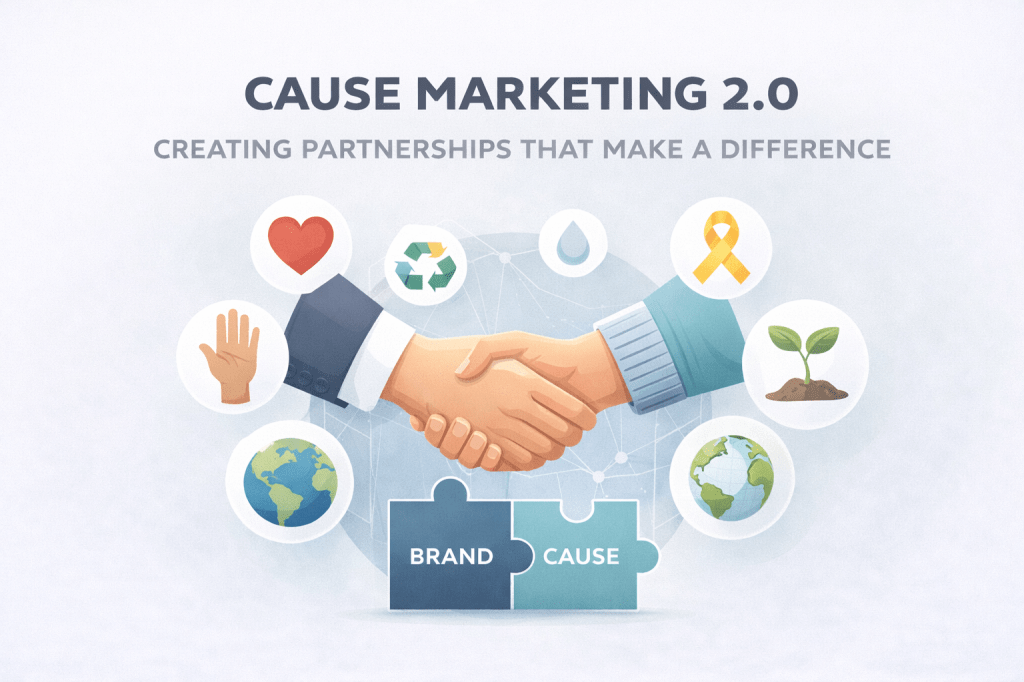
Cause marketing has entered a new era. What once revolved around charity tie-ins, donation badges, and seasonal awareness campaigns is evolving into something deeper, more strategic, and more accountable. In 2026, cause marketing is no longer about signaling good intentions. It is about building real partnerships that create measurable impact and long-term value for both society and the brand.
This shift, often referred to as Cause Marketing 2.0, reflects a broader change in consumer expectations. Audiences are more informed, more skeptical, and more values-driven than ever before. They are no longer impressed by surface-level activism. They want to see brands show up consistently, contribute meaningfully, and align their actions with their words.
Why Traditional Cause Marketing Is Losing Credibility
For years, cause marketing followed a predictable formula. Brands aligned with popular causes, launched limited campaigns, and amplified the message through advertising. While many of these efforts were well intentioned, they often felt transactional. Once the campaign ended, so did the brand’s involvement.
Consumers noticed the pattern. As social issues became more visible and complex, one-off gestures started to feel insufficient. Awareness alone was no longer enough. In some cases, it even backfired, creating accusations of performative activism or purpose-washing.
Cause Marketing 2.0 emerged as a response to this credibility gap. It prioritizes depth over visibility and commitment over campaigns.
From Campaigns to Long-Term Partnerships
The most important evolution in cause marketing is the move from short-term campaigns to long-term partnerships. Instead of temporarily attaching themselves to a cause, brands are now co-creating initiatives with nonprofits, social enterprises, and community organizations.
These partnerships are built around shared values and complementary strengths. Brands bring resources, platforms, and operational scale. Partners bring expertise, trust, and on-the-ground impact. Together, they design programs that extend beyond marketing calendars and into sustained action.
This model benefits everyone involved. Causes receive consistent support rather than sporadic attention. Brands build credibility through continuity. Audiences see progress instead of promises.
Impact Over Awareness
In Cause Marketing 2.0, success is no longer measured by impressions or engagement alone. Impact has become the central metric.
Leading brands are setting clear objectives for what their partnerships aim to achieve. This might include funding specific initiatives, expanding access to services, reducing environmental impact, or supporting underrepresented communities in tangible ways. Transparency around goals and outcomes is critical.
By sharing progress updates and real results, brands shift the conversation from storytelling to accountability. This builds trust and invites audiences to participate in something meaningful rather than simply consume a message.
Authentic Alignment Matters More Than Ever
Modern audiences are quick to spot misalignment. A cause partnership that contradicts a brand’s core business, values, or behavior will feel hollow regardless of how well it is promoted.
Cause Marketing 2.0 demands internal consistency. The cause must make sense within the brand’s broader mission and operations. This often requires brands to look inward before looking outward. How they treat employees, manage supply chains, and govern their business matters just as much as the causes they support publicly.
When alignment is real, the partnership feels natural. When it is forced, it erodes trust.
Co-Creation Instead of Sponsorship
Another defining characteristic of Cause Marketing 2.0 is co-creation. Instead of simply funding or sponsoring an initiative, brands are increasingly involved in designing solutions alongside their partners.
This might involve developing tools, platforms, or experiences that amplify impact. It might mean using brand expertise in design, technology, logistics, or communication to support the cause in ways that go beyond financial contributions.
Co-created initiatives feel more integrated and more durable. They also give brands a more meaningful role to play, moving from benefactor to collaborator.
The Role of Community and Participation
Modern cause marketing is participatory. Audiences are no longer passive observers. They want to contribute, learn, and be part of the solution.
Brands that succeed in Cause Marketing 2.0 create opportunities for meaningful involvement. This can take many forms, from volunteering and community events to user-driven fundraising, education, or advocacy. The key is that participation feels genuine and impactful, not symbolic.
When people feel that their involvement matters, cause marketing becomes a shared experience rather than a broadcast message.
Why This Approach Builds Stronger Brands
Cause Marketing 2.0 is not just good for society. It is good for brand resilience.
Brands that invest in real partnerships build emotional equity that goes beyond products or price. They become associated with values, contribution, and purpose. This strengthens loyalty, especially among younger consumers who increasingly choose brands based on alignment rather than convenience alone.
In a crowded and competitive market, purpose-driven credibility becomes a powerful differentiator. It cannot be copied easily because it is built over time through action, not messaging.
Looking Ahead
Cause Marketing 2.0 reflects a broader shift in branding itself. Marketing is no longer just about persuasion. It is about participation and responsibility. Brands are expected to be active members of society, not just commentators.
The future belongs to those who treat cause partnerships as long-term commitments rather than seasonal content opportunities. Brands that listen, collaborate, and stay accountable will not only make a difference. They will earn relevance in a world that increasingly values impact over intent.
Cause marketing has grown up. And in doing so, it has become one of the most powerful tools for creating meaningful change.
 Niki Martinov