
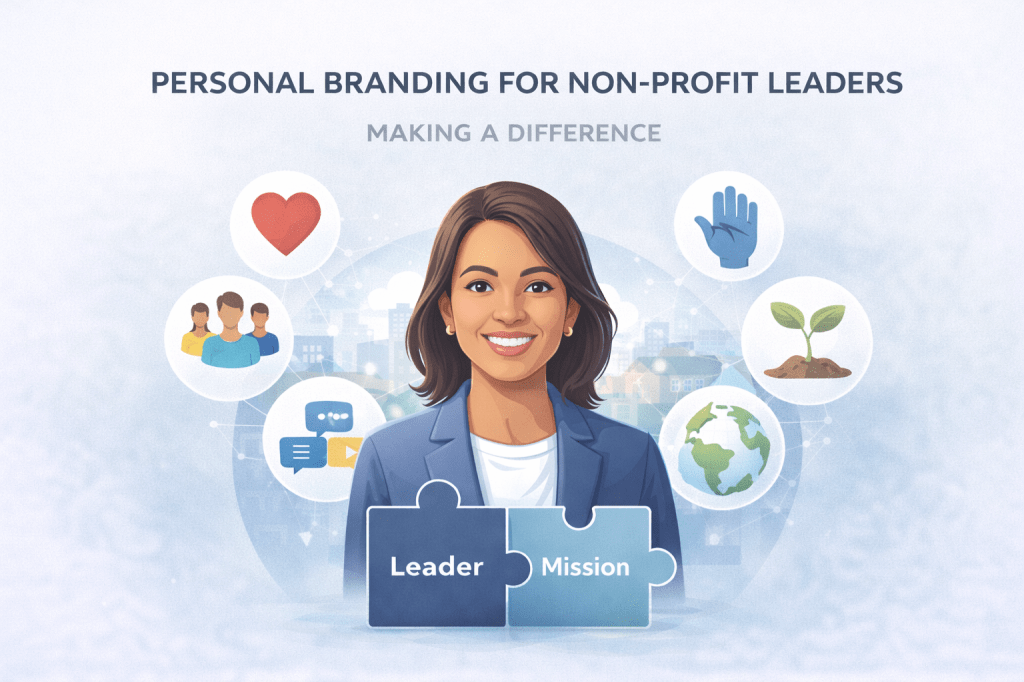
In the non-profit world, impact has always mattered more than visibility. Yet in today’s crowded digital landscape, even the most meaningful missions risk being overlooked if the people behind them remain invisible. This is where personal branding comes in, not as self-promotion, but as a powerful tool for leadership, trust, and influence. For non-profit leaders, a strong personal brand is no longer optional. It is a strategic asset that can amplify a cause, mobilize communities, and unlock new opportunities for change.
Personal branding in the non-profit sector is fundamentally different from its corporate or influencer-driven counterparts. It is not about chasing attention or building a following for its own sake. It is about becoming a credible, human bridge between a mission and the people who can support it. When done thoughtfully, personal branding helps leaders put a face, a voice, and a set of values behind abstract goals.
Why Personal Branding Matters in the Non-Profit Space
Non-profit organizations rely on trust more than almost any other sector. Donors, partners, volunteers, and communities want to know who they are supporting and why. A visible, authentic leader helps answer those questions.
When a non-profit leader communicates clearly about their values, experiences, and motivations, it creates emotional connection. People are more likely to engage with a mission when they can relate to the person guiding it. In this sense, personal branding becomes a trust accelerator. It humanizes the organization and makes its work easier to understand and support.
In an era where funding is competitive and attention is scarce, leaders who can articulate their mission with clarity and conviction often gain an edge, not because they are louder, but because they are more relatable.
Leadership Visibility as a Form of Accountability
Personal branding is also about accountability. When leaders show up publicly and consistently, they signal responsibility and openness. This visibility reassures stakeholders that there is real leadership behind the mission, not just an abstract institution.
For non-profit leaders, sharing insights, challenges, and progress publicly can strengthen credibility. It shows that the work is ongoing, complex, and driven by real people. Transparency builds confidence, especially in a sector where trust is essential for long-term support.
Importantly, this does not require oversharing. Thoughtful communication focused on impact, learning, and purpose is far more effective than constant updates or self-focus.
Telling the Story Behind the Mission
Every non-profit has a story, but the most compelling stories often come through the voices of its leaders. Personal branding allows leaders to connect the mission to their own journey. Why this cause matters to them. What they have learned along the way. What keeps them committed despite challenges.
These narratives create depth. They transform the mission from a set of goals into a lived experience. When audiences understand the human story behind the work, they are more likely to care, engage, and advocate.
Storytelling does not need to be dramatic or polished. Honest reflections, lessons learned, and moments of insight are often more powerful than perfectly crafted messages.
Building Influence Without Ego
One of the biggest misconceptions about personal branding is that it is ego-driven. In the non-profit context, the opposite is true. Effective personal branding shifts focus away from the individual and toward the cause.
The goal is not to be the hero of the story, but the guide. A strong non-profit leader uses their visibility to spotlight communities, teams, partners, and beneficiaries. Their personal brand becomes a platform that elevates others and amplifies collective impact.
This approach builds influence rooted in service, not self-interest. It also ensures that the personal brand strengthens the organization rather than overshadowing it.
Digital Presence as a Leadership Tool
Today, much of a leader’s influence is shaped online. Platforms like LinkedIn, newsletters, podcasts, and public speaking channels offer non-profit leaders the opportunity to share perspectives, advocate for change, and connect with global audiences.
A thoughtful digital presence allows leaders to contribute to conversations around their cause, position themselves as credible voices, and attract supporters aligned with their values. Consistency matters more than frequency. A clear point of view expressed regularly builds recognition and trust over time.
The most effective non-profit leaders treat digital communication as an extension of their leadership, not a marketing task.
Long-Term Impact Through Personal Brand Alignment
When a leader’s personal brand aligns closely with their organization’s mission, the result is long-term resilience. This alignment helps navigate transitions, crises, and growth. It also ensures continuity, as trust in leadership can carry an organization forward even during periods of change.
For emerging non-profit leaders, building a personal brand early can open doors to partnerships, funding, and influence that would otherwise take years to establish. For established leaders, refining their personal brand can reinvigorate their mission and expand their reach.
Making a Difference Beyond the Organization
Personal branding empowers non-profit leaders to extend their impact beyond a single organization. By sharing knowledge, advocating publicly, and engaging in broader conversations, leaders can influence policy, inspire peers, and contribute to systemic change.
In this way, personal branding becomes a multiplier. It allows one leader’s voice to create ripple effects that benefit not just their organization, but the wider ecosystem around their cause.
Final Thoughts
Personal branding for non-profit leaders is not about visibility for visibility’s sake. It is about clarity, trust, and connection. It is about standing visibly behind a mission and inviting others to be part of it.
In a world that increasingly values transparency and human leadership, non-profit leaders who invest in their personal brand are better equipped to mobilize support, inspire action, and make a lasting difference. When the person and the purpose align, impact follows.
 Niki Martinov