
Sustainability has become one of the most powerful narratives in modern marketing. Consumers care more than ever about climate impact, ethical sourcing, and corporate responsibility. Brands know this. As a result, environmental language has flooded advertising across industries, from fashion to finance.
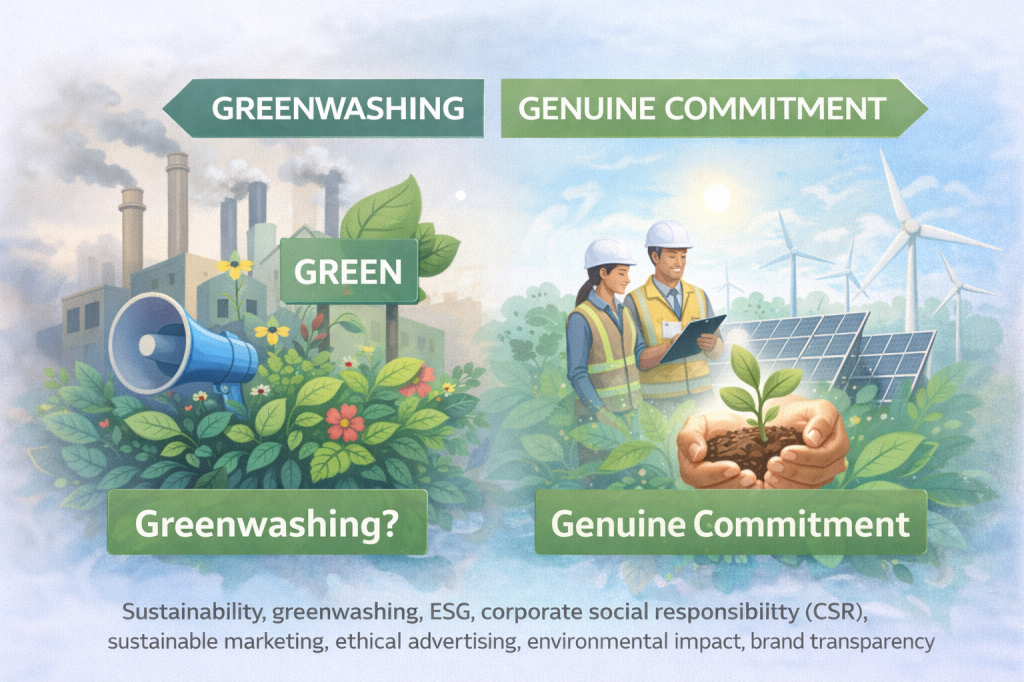
But not all “green” messaging is created equal. While some companies are making measurable, long-term commitments to sustainability, others are simply borrowing the language of responsibility without changing their behavior. This tension has given rise to one of the most important debates in contemporary branding: greenwashing versus genuine commitment.
Understanding the difference is no longer optional. It is essential for both consumers and marketers who want to build credibility in an era defined by transparency and scrutiny.
What Is Greenwashing?
Greenwashing occurs when a company markets itself as environmentally responsible without meaningful evidence to support the claim. It often relies on vague language, selective disclosure, or emotionally appealing imagery to create the impression of sustainability.
Common examples include packaging that uses earthy colors and nature imagery without explaining sourcing practices, claims such as “eco-friendly” or “all-natural” without certification, or highlighting one minor environmental initiative while ignoring larger systemic issues.
Greenwashing is rarely outright lying. It is usually about omission, exaggeration, or distraction. A brand might promote recyclable packaging while remaining silent about exploitative supply chains or carbon-intensive production methods. The messaging feels positive, but the substance is thin.
The danger is not just reputational. In many markets, regulatory bodies are tightening rules around environmental claims. Misleading sustainability messaging can now result in fines, legal action, and public backlash.
What Does Genuine Commitment Look Like?
In contrast, brands with genuine environmental commitment embed sustainability into their business model rather than treating it as a marketing campaign.
A truly committed brand demonstrates several characteristics. First, it sets clear, measurable goals. Instead of saying “We care about the planet,” it commits to reducing emissions by a specific percentage within a defined timeline. Second, it reports progress publicly, even when results fall short. Transparency builds trust.
Third, it integrates sustainability across operations. This includes supply chain audits, ethical sourcing, energy efficiency, packaging reduction, and long-term partnerships with credible environmental organizations. Sustainability is not a seasonal theme. It is a strategic pillar.
Patagonia is often cited as an example of sustained environmental positioning. Its commitment extends beyond messaging into repair programs, supply chain disclosure, and even encouraging consumers to buy less. Whether one agrees with all of its policies or not, the alignment between message and action is consistent.
Genuine commitment is also visible in tone. It avoids exaggerated claims and acknowledges complexity. Instead of promising to “save the planet,” it might focus on incremental progress and shared responsibility.
Red Flags of Greenwashing
For consumers and marketers alike, there are several warning signs that a sustainability claim may lack substance.
Vague language is the most common. Terms like “green,” “clean,” or “conscious” mean little without context. If an ad relies on emotional imagery rather than data, it is worth asking what is being omitted.
Another red flag is selective storytelling. A company might promote a limited-edition eco product while the majority of its portfolio remains unchanged. If sustainability is isolated to a small collection or a one-time campaign, it may function more as brand camouflage than systemic change.
A lack of third-party verification is also telling. Credible certifications, independent audits, and transparent reporting indicate seriousness. Absence of external validation often suggests that the claim cannot withstand scrutiny.
Finally, watch for misaligned incentives. If a company’s core revenue model depends on overconsumption, yet its marketing heavily promotes sustainability, the contradiction deserves attention.
Why Greenwashing Backfires in 2026
Today’s audiences are highly informed. Social media accelerates investigative journalism, and digital transparency tools make corporate records accessible. A misleading claim can go viral within hours.
Moreover, younger generations, particularly Gen Z and Millennials, increasingly make purchase decisions based on perceived brand values. They expect consistency. When a brand’s environmental narrative collapses under scrutiny, the damage extends beyond one campaign. It undermines the entire identity.
In the attention economy, trust is currency. Greenwashing may generate short-term goodwill, but it erodes long-term brand equity. Once credibility is lost, rebuilding it is expensive and slow.
The Business Case for Authentic Sustainability
Beyond ethics, there is a strategic argument for genuine environmental commitment. Sustainable practices can reduce long-term costs through energy efficiency and waste reduction. They can strengthen supply chain resilience. They can attract talent and investors who prioritize responsible governance.
Most importantly, they create a foundation for durable brand differentiation. As more brands compete on price and performance, values-based positioning becomes a meaningful advantage.
However, authenticity requires patience. Real sustainability initiatives often take years to implement and measure. This demands a shift from campaign thinking to systemic thinking. It means treating environmental responsibility as infrastructure, not decoration.
How Brands Can Avoid the Greenwashing Trap
For marketers, the solution is not to avoid sustainability messaging altogether. It is to align communication with reality.
Start by auditing claims internally. If a statement cannot be supported with data or documentation, it should not appear in advertising. Replace grand promises with specific actions. Communicate progress transparently, including challenges.
Integrate sustainability into the broader brand narrative rather than isolating it as a trend-driven theme. Consumers can sense when a message feels opportunistic. They respond differently when it feels embedded.
Finally, accept that imperfection is more credible than perfection. A brand that admits it is still improving often earns more respect than one that presents itself as flawless.
Final Thoughts
The line between greenwashing and genuine commitment is becoming sharper each year. In a landscape shaped by transparency, regulation, and cultural awareness, sustainability is no longer a marketing accessory. It is a credibility test.
Brands that treat environmental messaging as cosmetic risk losing the very trust they seek to gain. Those that embed sustainability into operations, culture, and long-term strategy will not only avoid backlash but build enduring loyalty.
In the end, the difference is simple. Greenwashing speaks loudly about small changes. Genuine commitment quietly builds systems that matter.
 Niki Martinov