
For decades, branding was about function: features, benefits, and price. Companies competed on performance or affordability, treating branding as a rational exchange. But in today’s hyper-connected, saturated marketplace, facts and features are no longer enough. Competitors can replicate functionality, prices, and even distribution channels almost overnight.
What cannot be copied is how a brand makes people feel.
Welcome to the Emotional Brand-Building Era, where the most enduring form of brand equity isn’t what you sell—it’s the emotions you evoke.
From Transactional to Transformational
The shift is seismic: from asking “What does this product do for me?” to “Who does this product help me become?”
Nike doesn’t sell sneakers—it sells empowerment and perseverance. Apple doesn’t sell computers—it sells creativity, identity, and effortless belonging. Airbnb doesn’t sell accommodation—it sells a sense of home anywhere in the world.
In this era, products are vehicles. What truly drives loyalty is the emotional transformation a brand enables.
The Science Behind Emotional Branding
Neuroscience confirms that decisions are made emotionally first, then rationalized logically afterward. Consumers may compare features, but emotions—joy, trust, nostalgia, security, inspiration—determine what sticks in memory and sparks loyalty.
When brands build emotional “fortresses” around their identity, they gain resilience. Customers stop seeing them as commodities to replace and start treating them as relationships to protect.
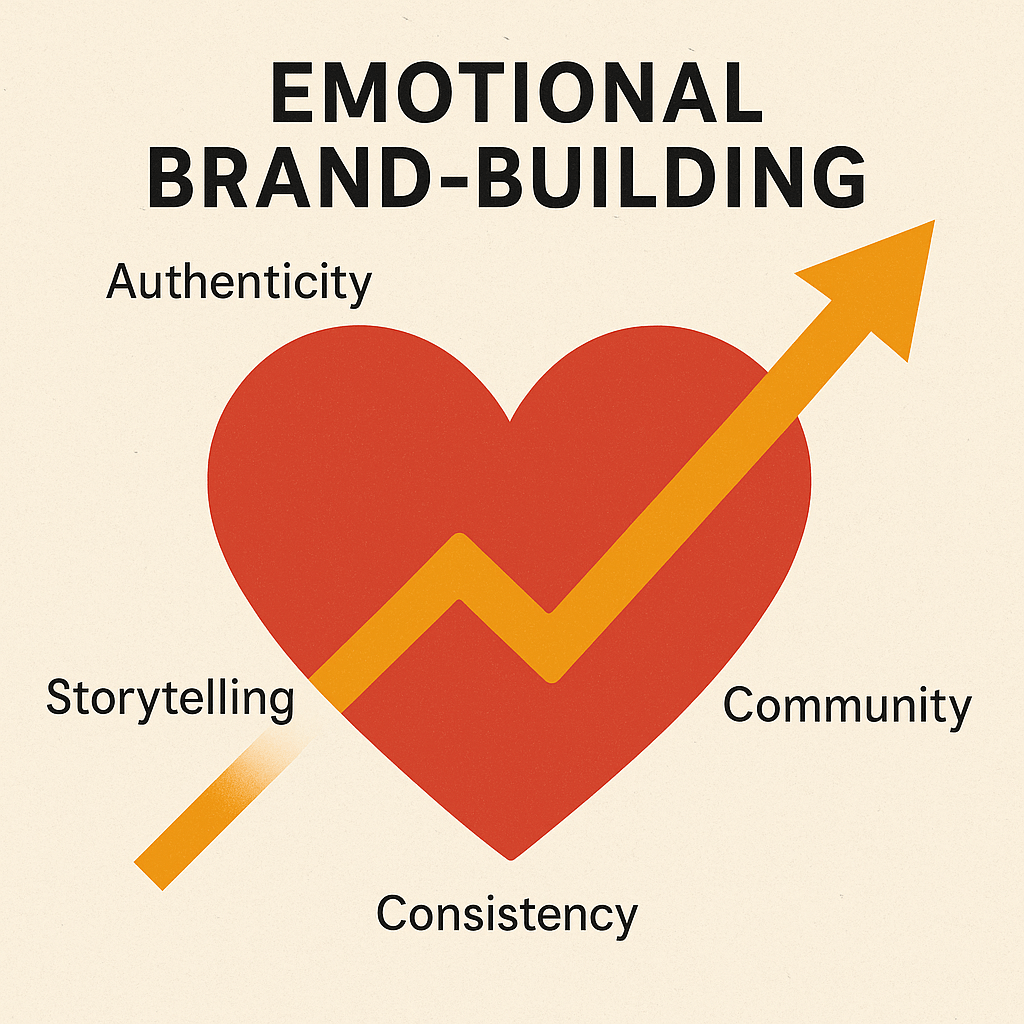
The Pillars of Emotional Brand-Building
- Values-Driven Authenticity
Audiences crave honesty, transparency, and consistency. They want brands that not only talk about values but live them—whether in sourcing, sustainability, or leadership. A single misstep or contradiction can breed cynicism and undo years of trust. - Purpose-Driven Storytelling
Stories ignite emotion. Brands must articulate why they exist, not just what they sell. Patagonia’s environmental mission or Dove’s campaigns on real beauty are powerful because they place values and human impact at the center. - Community and Belonging
Emotional brands go beyond transactions to foster spaces for shared identity—online forums, events, or user-generated movements. These communities transform individual purchases into collective experiences, turning customers into advocates. - Sensory and Experiential Design
Emotions are triggered by sensory cues—visual design, sonic logos, tactile packaging, or immersive store environments. Netflix’s “ta-dum” or the curated feel of an Apple store creates instant recognition and emotional memory. - Consistency Across Touchpoints
Emotional trust is fragile. Every interaction—whether customer service, unboxing, or digital content—must reinforce the same emotional promise.
New Metrics for a New Era
Traditional KPIs like sales and conversions still matter, but they don’t capture the full picture. Emotional branding demands new measures:
- Brand Sentiment Analysis: tracking authentic emotional language consumers use online.
- Advocacy Rates: measuring unsolicited recommendations and organic sharing.
- Lifetime Feeling Value (LFV): the depth and consistency of positive emotional experiences over time, reframing customer lifetime value through the lens of emotion.
The Risk of Ignoring Emotion
Brands that continue to lead with features alone risk becoming forgettable, interchangeable, and trapped in price wars. Emotional resonance, on the other hand, builds loyalty that no discount can shake.
Conclusion: The Heart as the Ultimate Differentiator
In the past, value was defined by utility. Today, it’s defined by emotional connection. Products may evolve, markets may shift, and technologies may disrupt—but the brands that endure are those that make people feel something lasting.
In 2025 and beyond, feelings aren’t soft metrics. They are the hardest currency of them all.

